
Things to Do in Ankara in April
April weather, activities, events & insider tips
Low Season · Budget Friendly
April Weather in Ankara
Long-run averages for April
63°F (17°C)
High Temp
42°F (6°C)
Low Temp
1.8 inches (46 mm)
Rainfall
60%
Humidity
6
Sunny-Day UV
Making the most of April in Ankara? Browse tours and activities in Ankara on GetYourGuide.
Is April Right for You?
Weigh the advantages and considerations before booking
Advantages
- + April is Ankara's great awakening. The scent of damp earth and flowering Judas trees replaces winter's bite. The Anatolian sun finally warms the honey-colored stones of the Citadel without the punishing heat of summer.
- + You'll have Ankara's monumental core to yourself. Atatürk's Mausoleum, the Museum of Anatolian Civilizations, all of it. Compare that to summer's tour bus caravans. The light hits the Hittite artifacts at just the right angle.
- + This is the shoulder season sweet spot for value. Accommodation rates haven't yet spiked for the summer influx. The weather is reliable enough for day trips to the surrounding highlands. Worth it.
- + Seasonal food shifts decisively. You'll taste the first wild greens (şevket-i bostan, radika) in meze platters. Cafes serve fresh mulberry juice, a fleeting taste of early spring. Don't miss this.
Considerations
- − The weather is a fickle negotiator. A bright morning at 17°C (63°F) can turn into a blustery, jacket-requiring afternoon. The wind whips down Atatürk Boulevard. Layered dressing isn't optional. It's survival.
- − While major sites are quiet, the city is in full work and school mode. The morning crush on the Metro between Kızılay and Ulus feels local and purposeful, not touristic. Efficient if you're ready for it. Overwhelming if you expected a leisurely start.
- − The landscape is still shaking off winter's brown. If your mental image of Anatolia involves golden, sun-baked plains, April's palette is more muted greens and greys. The dramatic Cappadocia day trips are still a few weeks from their lush peak.
Settled on April? Compare hotel prices in Ankara for your dates on Trip.com.
Best Activities in April
Top things to do during your visit
Ankara in April arrives as a slow exhale after the Anatolian plateau's long, grey winter. Daytime temperatures climb toward 17°C. Warm enough for shirtsleeves by midday. Still carrying a bite after sundown when the mercury drops near 6°C. A jacket stuffed in a daypack earns its weight by evening. The rain that falls, roughly 46 millimetres spread across the month, tends to come in brief, sharp downpours that leave the air smelling of wet stone and fresh earth, then clear to reveal skies so wide and pale blue they make the city's Ottoman and Republican-era rooflines look etched in charcoal. Cherry and apricot blossoms line the older residential streets of Çankaya and Kavaklıdere, their petals drifting onto café tables where Ankara's civil servants and university students linger over double-brewed Turkish tea. This is a city that rewards patience and curiosity rather than a checklist mentality. Ankara's restaurants, from the smoke-filled kebab houses of Ulus to the contemporary meyhanes of Tunalı Hilmi Caddesi, are quieter in April than they will be once domestic tourism surges in summer, which means shorter waits and unhurried conversations with owners who will press extra plates of meze on you without being asked. The nightlife, concentrated around Kızılay and the bars tucked into Sakarya Caddesi's side streets, runs late by European standards. Few places fill before ten. It carries a particular energy in April, when the semester is winding down and the outdoor terraces have just reopened. Walking Ankara at this time of year, you catch the city in transition: parks still half-bare, the scent of simit carts and roasting chestnuts competing with the first warm breeze off the steppe, the Atatürk Mausoleum's vast courtyard nearly empty at dawn, its travertine catching the low morning light in shades of honey and cream. For anyone asking whether Ankara is worth visiting, the answer is sharpest in April. The capital reveals itself not as a bureaucratic waypoint between Istanbul and Cappadocia but as a city with its own deep grain. Hittite bronze and Phrygian gold in the Museum of Anatolian Civilizations. The medieval ramparts of the citadel rising above a maze of timber-framed houses. A food culture rooted in Central Anatolian farmland that owes nothing to the coastal tourist palate. Hotels across every price tier have availability in April, from the business towers near Kızılay to the restored Ottoman guesthouses inside the castle walls, and rates sit well below summer peaks. Safety is comparable to any major European capital. The well-lit central districts feel relaxed even after dark, and the metro runs until midnight.

Ankara: Private Walking Tour With A Guide ( Private Tour )
walking_tourA private walking tour of Ankara with a local guide strips away the capital's concrete-and-ministry first impression and replaces it with the city that Ankaralılar inhabit. You will climb the narrow, cobbled lanes inside the citadel walls, where crumbling Ottoman houses lean against Roman foundations and cats doze on sun-warmed doorsteps, then descend through the copper-and-spice bazaar of Çıkrıkçılar Yokuşu, where the tang of sumac and dried pepper hits before you round the corner. The route threads past the Column of Julian, standing alone in a traffic island like a half-forgotten parenthesis, and into Hamamönü, the restored bathhouse quarter where the smell of fresh-baked katmer drifts from hole-in-the-wall bakeries.
The only way to decode the layered sediment of Ankara's oldest quarters, Roman, Byzantine, Seljuk, Ottoman, Republican, in a single coherent narrative shaped to your pace.
Insider tip: Ask your guide to include the rooftop terrace at the northeast corner of the citadel walls just before the call to prayer. The panorama sweeps from Atakule Tower to the Kocatepe Mosque, and the acoustics carry every muezzin in the old city simultaneously.

Turkish Cuisine Cooking Class at Local Home with Family
foodThis cooking class develops not in a commercial kitchen but at a family dining table in a residential Ankara neighborhood, where the host's mother may well drift in to correct your technique on mantı. The tiny lamb dumplings that Central Anatolian grandmothers judge each other by. You will roll dough thin enough to read newspaper print through, pinch each dumpling shut, and learn to make the garlic-yogurt and dried-mint-butter sauces that pool together on the plate in a slick of warm fat and sharp acid. The kitchen smells of caramelising onions and toasted red pepper flakes, and the sound of a copper saucepan scraping across the stovetop is the soundtrack to an afternoon that ends with everyone eating far too much.
Ankara's Central Anatolian kitchen, mantı, keşkek, Çubuk pickles, tarhana soup, is a distinct culinary tradition rarely taught to outsiders, and this is one of the few places to learn it inside a Turkish home.
Insider tip: Wear clothes you do not mind staining. The red pepper paste used in several dishes leaves marks that survive a hotel laundry cycle, and the aprons provided are small.

Private Ankara Sightseeing Tour
guided_experienceA private sightseeing tour of Ankara by vehicle solves the city's main logistical challenge. The distances between its headline sights are too far to walk comfortably but too short to justify wrestling with unfamiliar bus routes. The route typically sweeps from the Museum of Anatolian Civilizations, where Hittite sun-disc standards and Phrygian lion-headed vessels gleam under gallery lights, through the Republican quarter's wide Parisian boulevards to Anıtkabir, Atatürk's mausoleum, whose monumental courtyard of pale Eskişehir marble echoes underfoot. Along the way you pass through Kızılay's commercial buzz and the leafy residential calm of Çankaya. The contrast between them is sharp.
Ankara's geography sprawls across a dry plateau, and a guided vehicle tour compresses a week of public-transit orienteering into a single day with expert commentary.
Insider tip: Ask your driver to route through Atatürk Orman Çiftliği, the old presidential farm on the western edge of the city, where Ankara's families picnic under poplar trees and the city skyline feels impossibly distant. Most standard itineraries skip it.
This month: April's mild weather, highs around 17°C, makes the open-air portions of this tour, the long walk across Anıtkabir's ceremonial road, far more comfortable than the summer months when the treeless plateau bakes.

Full Day Cappadocia Private Tour
day_tripCappadocia lies roughly four hours southeast of Ankara by road, and this full-day private tour bridges that distance with a dawn departure and a dusk return. The landscape shift is staggering. Ankara's steppe scrub gives way to the eroded volcanic tuff of Göreme, where rock formations rise from the valley floor like melted candles, their surfaces pocked and striated in bands of ochre, rust, and chalky white. You will walk through the rock-cut churches of the Göreme Open-Air Museum, where eleventh-century Byzantine frescoes glow in pigments of lapis and cinnabar under low stone ceilings, then descend into the Derinkuyu or Kaymaklı underground cities, where the air turns cool and damp and the silence swallows every sound except your own breathing. The drive back, if timed well, crosses the salt flats of Tuz Gölü under a sky streaked pink and copper.
Cappadocia is one of the most geologically surreal landscapes on Earth, and accessing it as a private day trip from Ankara avoids the cost and lost time of a separate hotel booking.
Insider tip: Request a departure before 6 AM. The early start puts you inside the Göreme churches ahead of the midday coach groups from Nevşehir, and the morning light in the valleys is warmer and more photogenic than the flat noon glare.
This month: April in Cappadocia is cooler than Ankara, with morning temperatures in the valleys dipping near freezing. Bring a fleece layer for the underground cities, where the stone holds winter's chill well into spring.

Private Airport Transfer From/To Ankara Airport to Cankaya Hotels
transportA private airport transfer between Esenboğan Airport and Ankara's Çankaya hotel district eliminates the one tedious leg of arriving in the capital. Esenboğa sits roughly 28 kilometres northeast of the city centre on an exposed stretch of plateau, and at the tail end of a long flight the last thing anyone wants is to negotiate a taxi fare or decipher the Havaş shuttle schedule. The vehicle meets you at arrivals, the drive takes 30 to 45 minutes depending on traffic along the O-20 motorway, and the quiet interior after the sensory assault of a crowded terminal, engine hum, cool air conditioning, the smell of clean upholstery, is a small mercy.
Esenboğan Airport is far enough from central Ankara that a pre-arranged, fixed-fare transfer removes the single most stressful transition in an otherwise easy-to-navigate city.
Insider tip: If your flight lands after 10 PM, confirm the booking the morning of departure. Late arrivals occasionally face a longer wait at the kerb, and a quick message to the operator ensures the driver is tracking your actual landing time rather than the scheduled one.

Ankara Bronze Age Private Tour: Hattusas, Yazilikaya & Alacahöyük
private_tourThis full-day private tour drives northeast from Ankara into the austere, wind-scoured landscape of north-central Anatolia to reach Hattusha, the Hittite imperial capital that dominated the Bronze Age Near East for nearly five centuries. The site sprawls across a rocky ridge above the village of Boğazkale, and walking through the Lion Gate, where two carved basalt lions snarl from either side of the threshold, their muzzles worn smooth by three thousand years of weather, produces a visceral chill that no museum reproduction can replicate. From Hattusha you continue to Yazılıkaya, an open-air rock sanctuary where Hittite gods march in bas-relief procession along a narrow limestone cleft, the figures sharp enough to count individual pleats in their robes, and then to Alacahöyük, where the royal tombs yielded the gold and bronze sun-disc standards now displayed in Ankara's Museum of Anatolian Civilizations. The smell of wild thyme and dry grass follows you across every site, and the silence, broken only by wind and the occasional shepherd's bell, is total.
The Hittite heartland is one of the least-visited major archaeological zones in the Mediterranean world, and seeing these sites with a specialist guide transforms scattered ruins into a coherent narrative of an empire that rivalled Egypt.
Insider tip: Wear sturdy, ankle-supporting shoes. Hattusha's upper city involves climbing over uneven rock and loose gravel across a site that covers more than a square kilometre, and the paths are not paved.
This month: April's moderate temperatures on the plateau, highs near 17°C in Ankara, slightly cooler at Hattusha's higher elevation, make the extensive outdoor walking far more tolerable than the scorching summer months when shade at these open sites is nearly nonexistent.
Where to Stay in Ankara in April
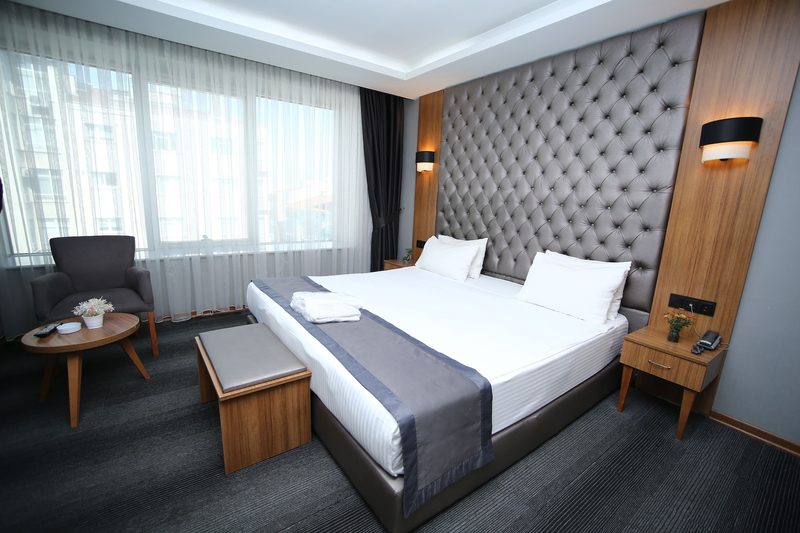
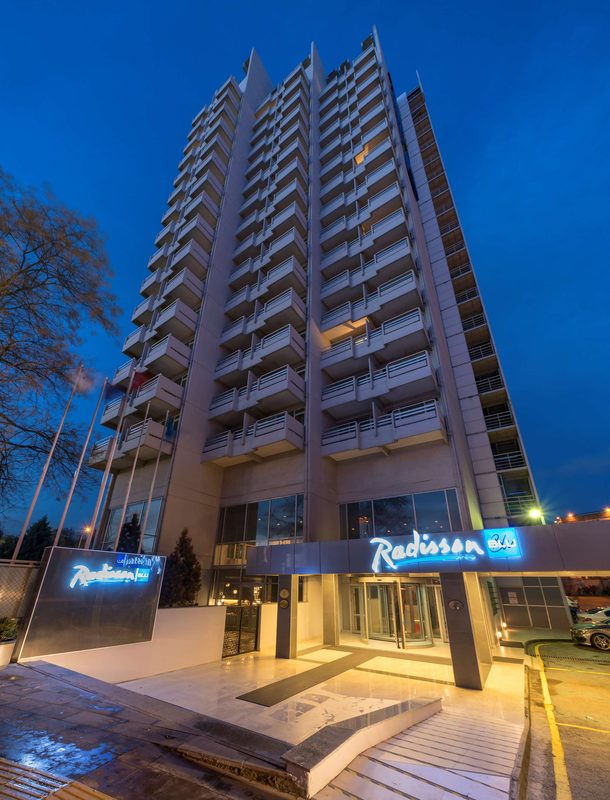
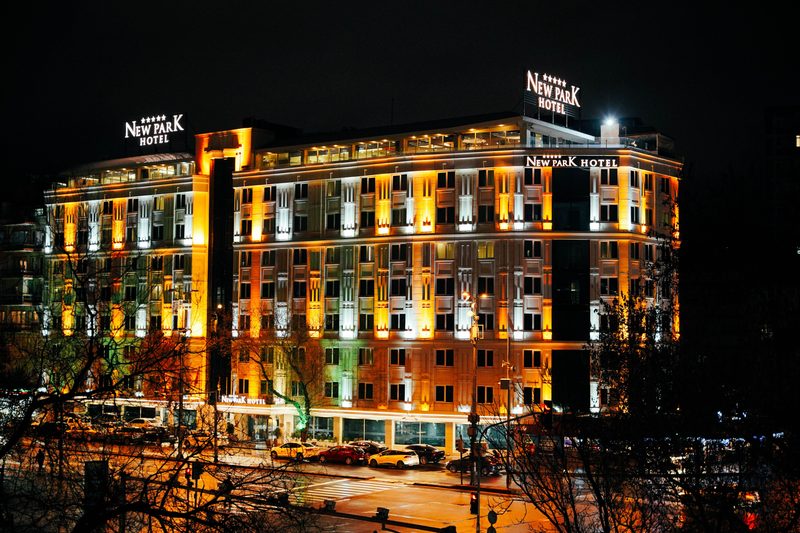
Hand-picked hotels across price tiers for April travellers.
Public Holidays in April
Dates that affect opening hours, transport and crowds
Ulusal Egemenlik ve Çocuk Bayramı
Known in English as National Independence & Children's Day. Observed nationwide as a public holiday.
Ulusal Egemenlik ve Çocuk Bayramı
Known in English as National Independence & Children's Day. Observed nationwide as a public holiday.
Packing Checklist
Bookmark this page — your progress is saved between visits
Need the full list with shopping links?
Climate-specific gear, brand recommendations, and what to leave at home.
View Ankara Packing List →Essential Tips
Insider knowledge and common pitfalls to avoid
Insider Knowledge
Head to the courtyard of the Hacı Bayram Mosque complex at dusk. The light is best then. The scent of grilled meat from nearby restaurants mixes with the call to prayer. The illuminated Temple of Augustus next door creates a striking layering of epochs.
Skip the standard restaurants in Ulus. Follow office workers at lunch instead. Head to the tiny, family-run eateries in the backstreets of Samanpazarı. Order proper Ankara Tava (lamb stew). Or try a plate of juicy, charcoal-grilled köfte.
The best people-watching and coffee isn't in a chain cafe. Find a traditional 'kahvehane' near the Citadel walls. Order a Turkish coffee. Listen to the rhythmic click of backgammon pieces. Hear the low murmur of conversation.
If it drizzles, don't retreat. Head to the CerModern arts center. It's housed in a renovated train depot. The industrial space feels cosy in bad weather. The café is a haunt of Ankara's creative class.
Avoid These Mistakes
Underestimating the temperature swing is a mistake. Dining al fresco at night sounds lovely. Then you're shivering in your spring jacket. Most locals still prefer indoor tables in April.
Don't try a Cappadocia day trip. It's a 4+ hour drive each way. You'll spend 8 hours in a car. You'll get a rushed, superficial look. If Cappadocia is a priority, overnight there.
Don't assume everything is walkable. Ankara is a large, planned city. The distance from the Museum of Anatolian Civilizations to Anıtkabir is about 4 km (2.5 miles). It's uphill. Use the efficient, if crowded, Metro. Or hail a taxi.
Short on time? See day trips around Ankara on GetYourGuide.
Ready to plan your trip to Ankara?
Now that you've got the research covered, here's where to go next.
Explore More Activities in Ankara
Didn't see anything interesting yet?
Browse Viator's full catalog of tours, day trips, food experiences, and private guides in Ankara.
See All Ankara Tours on Viator